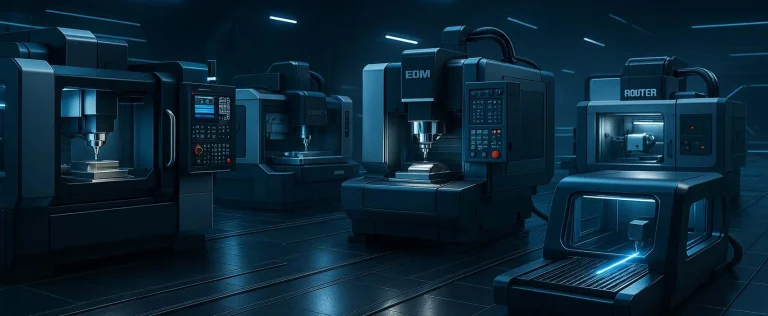
Fabrication & Punching Machines

Metal sheet or plate cutting, folding and punching is done by Fabrication & Punching Machines. They are able to produce other industrial parts in a fast and precise manner. Fabrication and punching machines make production more efficient and save time when applied in the car, construction and engineering industries.

Fabrication & Punching Machines: Complete Guide, Types, Applications & Future

IntroductionFabrication & Punching Machines

In today’s fast-moving industrial world, accuracy and speed are everything. From the car you drive to the airplane that takes you overseas, every part has been cut, bent, or shaped using advanced fabrication technologies. At the heart of this revolution are Fabrication & Punching Machines, which have transformed traditional metalworking into a highly automated, precise, and efficient process.

Whether it’s punching holes in sheet metal, bending parts into complex shapes, or cutting thick steel plates, these machines are indispensable. In this guide, we’ll break down how fabrication and punching machines work, their different types, advantages, applications, and what the future holds for this technology.


What are Fabrication & Punching Machines?

Fabrication machines are equipment used to cut, bend, shape, and assemble metal components. Punching machines, on the other hand, focus specifically on creating holes or indentations in sheet materials using punches and dies. Together, these machines play a vital role in sheet metal processing.

In simple terms, fabrication machines are the “builders,” while punching machines are the “detail makers.” Both are essential for industries ranging from automotive to aerospace.


Working Principle of Fabrication & Punching Machines

The basic principle is straightforward: apply force to reshape or cut metal. Traditional methods relied on manual labor and hydraulic force, but modern machines are powered by CNC (Computer Numerical Control) systems.

For example:

  • A CNC Punching Machine uses a programmed punch and die set to make precise holes.

  • A CNC Press Brake bends sheet metal into accurate angles.

  • A CNC Shearing Machine cuts large sheets with a clean, straight edge.

Think of it like using scissors and a ruler on paper—only here, it’s advanced machines working on steel or aluminum sheets.


Types of Fabrication & Punching Machines

1. CNC Punching Machine

CNC Punching Machines automate the punching process with computer programming. Instead of manually aligning each hole, the operator inputs a design, and the machine does the rest with unmatched precision.

🔗 Learn more: CNC Punching Machine

Applications: HVAC duct making, control panels, appliance casings, automotive sheet parts.


2. CNC Press Brake (Bending Machine)

Press brakes are designed to bend and fold metal sheets at specific angles. With CNC control, bends are highly accurate, repeatable, and complex designs are easy to achieve.

🔗 Explore details: CNC Press Brake

Applications: Cabinets, enclosures, brackets, and structural components.


3. CNC Shearing Machine

A CNC Shearing Machine is used for straight-line cutting of sheet metals. It ensures clean edges, high accuracy, and minimal material waste.

🔗 Read more: CNC Shearing Machine

Applications: Steel sheets for construction, shipbuilding, and automotive panels.


4. Laser & Plasma Cutting Machines

These machines use high-energy beams or plasma arcs to cut complex shapes into thick materials, offering more flexibility than traditional shearing.


5. Hydraulic Punching Machines

Hydraulics provide immense power, allowing for punching thicker and harder materials that mechanical punches can’t handle.


6. Robotic Fabrication Systems

Integrated with robotics and automation, these systems handle large-scale, high-volume production with minimal human input.


Key Components of Fabrication & Punching Machines

  • CNC Control Unit – Brain of the machine, ensures precision.

  • Hydraulic/Servo Systems – Provide power and movement.

  • Tooling (Punch, Die, Blades, Bending Tools) – Shapes and cuts the material.

  • Workholding Systems – Keep materials stable during operation.

  • Safety Systems – Protect operators from hazards.


Materials Processed of Fabrication & Punching Machines 

These machines are versatile and can process:

  • Mild Steel

  • Stainless Steel

  • Aluminum

  • Copper & Brass

  • Composite Panels


Applications of Fabrication & Punching Machines

  • Automotive Industry – Car body panels, chassis components.

  • Aerospace – Aircraft structures, brackets, precision parts.

  • Shipbuilding – Large steel panels, structural reinforcements.

  • Electronics – Enclosures, switchboards, circuit housing.

  • Furniture & Interior – Modular furniture, kitchen cabinets.

  • Small Workshops – Custom sheet metal projects.


Advantages of Fabrication & Punching Machines

  • High accuracy and repeatability

  • Faster production cycles

  • Reduced material waste

  • Lower cost in bulk production

  • Flexible design capabilities

  • Safer than manual methods


Limitations & Challenges of Fabrication & Punching Machines

  • High initial investment

  • Requires skilled operators and programmers

  • Regular maintenance and tooling costs

  • Power consumption in large-scale production

  • Shortage of skilled manpower in some industries


Safety Standards & Best Practices

  • Always wear PPE (gloves, helmets, goggles).

  • Use machine guarding systems.

  • Follow CNC programming safety protocols.

  • Regular machine inspection and maintenance.


Future of Fabrication & Punching Machines

The future is all about automation, digitalization, and sustainability.

  • Smart Factories – IoT-enabled machines for real-time monitoring.

  • AI & Digital Twin – Virtual simulation before production.

  • Green Manufacturing – Energy-efficient machines, recyclable materials.

  • Robotics – Fully automated fabrication lines.


Comparison Tables

CNC Punching vs CNC Press Brake vs CNC Shearing

FeatureCNC Punching MachineCNC Press BrakeCNC Shearing Machine
FunctionCreates holes, slotsBends sheetsStraight-line cuts
AccuracyVery highHighHigh
Common UsePanels, ductsEnclosuresLarge sheet cutting
FlexibilityMediumHighMedium

Traditional vs CNC Fabrication

Buying Guide: Choosing the Right Fabrication & Punching Machines

  • Production Needs – Volume, complexity, material thickness.

  • Capacity & Tonnage – Ensure machine power matches workload.

  • Software Compatibility – CNC programming integration.

  • After-Sales Service – Availability of spare parts and support.


Cost Factors of Fabrication & Punching Machines

  • Machine Price: $20,000 – $200,000 depending on type & capacity.

  • Tooling Costs: Punches, dies, blades need replacement.

  • Maintenance: Regular servicing adds to operational cost.

  • Energy Consumption: CNC machines are power-intensive.

Conclusion

Fabrication & Punching Machines are the backbone of modern industry. From simple sheet cutting to advanced aerospace components, they provide the precision, speed, and reliability manufacturers need to stay competitive.

With CNC control, automation, and future-ready technologies, these machines are evolving rapidly. Whether you’re running a large factory or a small workshop, understanding these machines will help you choose the right equipment and stay ahead in the manufacturing game.

Explore more through detailed Fabrication & Punching Machines guides on:
  1. CNC Punching Machine
  2. CNC Press Brake
  3. CNC Shearing Machine

📚 FAQs About Fabrication & Punching Machines

Q No Question Answer
Q1 What is a fabrication machine? A fabrication machine is equipment used to cut, bend, or assemble metal components into desired shapes. These machines handle a variety of sheet metals with precision.
Q2 What is the difference between fabrication and punching? Fabrication is the overall process of shaping and assembling metal, while punching specifically refers to creating holes or indentations in the metal using a punch and die.
Q3 How does a CNC Punching Machine work? It uses computer programming to control a punch and die set. The operator inputs the design, and the machine automatically creates precise holes in sheet metal.
Q4 Where are CNC Press Brake machines used? CNC Press Brakes are used for bending sheet metal in industries like automotive, aerospace, and furniture manufacturing.
Q5 Which industries use shearing machines most? Shearing machines are widely used in construction, shipbuilding, automotive, and metal fabrication shops.
Q6 Can CNC punching handle stainless steel? Yes, CNC punching machines can process stainless steel sheets depending on the machine’s tonnage capacity.
Q7 What thickness can a shearing machine cut? CNC shearing machines can typically cut sheets from 0.5 mm up to several centimeters, depending on model and capacity.
Q8 How accurate are CNC press brakes? CNC press brakes achieve high accuracy with tolerances often within ±0.1 mm, ensuring consistent bends.
Q9 Are these machines safe to use? Yes, with proper training, PPE, and machine guarding systems, CNC fabrication and punching machines are safe.
Q10 What is the lifespan of punching tools? Punching tools last several months to years depending on material processed, frequency of use, and maintenance.
Q11 Can small workshops use fabrication machines? Yes, desktop or small-capacity CNC machines are ideal for small workshops or custom fabrication projects.
Q12 How much does a CNC Punching Machine cost? Prices range from $20,000 to $200,000 depending on size, features, and capabilities.
Q13 What materials can be processed? Mild steel, stainless steel, aluminum, copper, brass, and composite panels.
Q14 What is the role of hydraulics in punching? Hydraulics provide the force needed to punch thicker or tougher metals that mechanical punches cannot handle.
Q15 Can laser cutting replace shearing? For complex shapes or thicker materials, laser cutting can be more flexible, but shearing remains faster for straight-line cuts.
Q16 How do robotic fabrication systems work? Robots automate material handling, cutting, bending, and assembly with minimal human intervention.
Q17 What is the future of fabrication machines? The future lies in automation, IoT integration, AI, energy efficiency, and smart factories.
Q18 Do these machines reduce waste? Yes, CNC systems optimize material usage, reduce errors, and minimize scrap.
Q19 Are they eco-friendly? Modern machines are designed to be energy-efficient and compatible with recyclable materials, promoting sustainability.
Q20 What training is required for operators? Operators need CNC programming skills, safety training, and understanding of machine maintenance.